 ZenScapes Inc
Trees, shrubs and ground covers that sit well beside stone
Planting is the last step of most jobs. These are plants that grow well north of Atlanta and look right against a wall or along a path, with what each one needs from the soil.

Start with the soil. Most of the plants here need soil that drains, and red clay often doesn’t. Before you choose, try the 24-hour hole test where the plant is going.
Small trees
Flowering dogwood
Cornus florida15 to 25 ft tall, 15 to 30 ft wide · Sun to part shade · Native
White bloom from March to May. It likes light shade and soil that drains. University of Georgia Extension says never to plant it on a wet site. Leaf diseases are common.
Eastern redbud
Cercis canadensis20 to 30 ft tall, 25 to 35 ft wide · Sun or part shade · Native
Pink to purple flowers on bare branches in early spring. It won’t take wet soil or a long drought, and it isn’t a long-lived tree.
Japanese maple
Acer palmatum15 to 25 ft tall, 10 to 25 ft wide · Dappled shade · From East Asia
Wants moist soil that drains and shelter from hot afternoon sun, which scorches the leaves. A late frost can catch the new growth.
Crape myrtle
Lagerstroemia indica6 to 30 ft tall, by variety · Full sun · From Asia
Flowers from July to September in white, pink, red or purple, and handles dry spells. One thing to know beside paving: the fallen flowers can stain a walkway, so set it back from one.
Southern magnolia
Magnolia grandiflora60 to 80 ft tall, 30 to 50 ft wide · Sun or part shade · Native to the Southeast
Evergreen, with creamy white flowers in May and June. It drops big leaves through the year and needs room. ‘Little Gem’ is the compact variety, at 15 to 20 feet tall and 8 to 10 wide.
Serviceberry
Amelanchier arborea15 to 25 ft tall, 10 to 15 ft wide · Sun to part shade · Native
White flowers from March to May. It does best in moist soil that drains.
Fringe tree
Chionanthus virginicus12 to 30 ft tall, 12 to 20 ft wide · Sun or part shade · Native
White, fringe-like flowers in April and May. It tolerates clay and some drought.
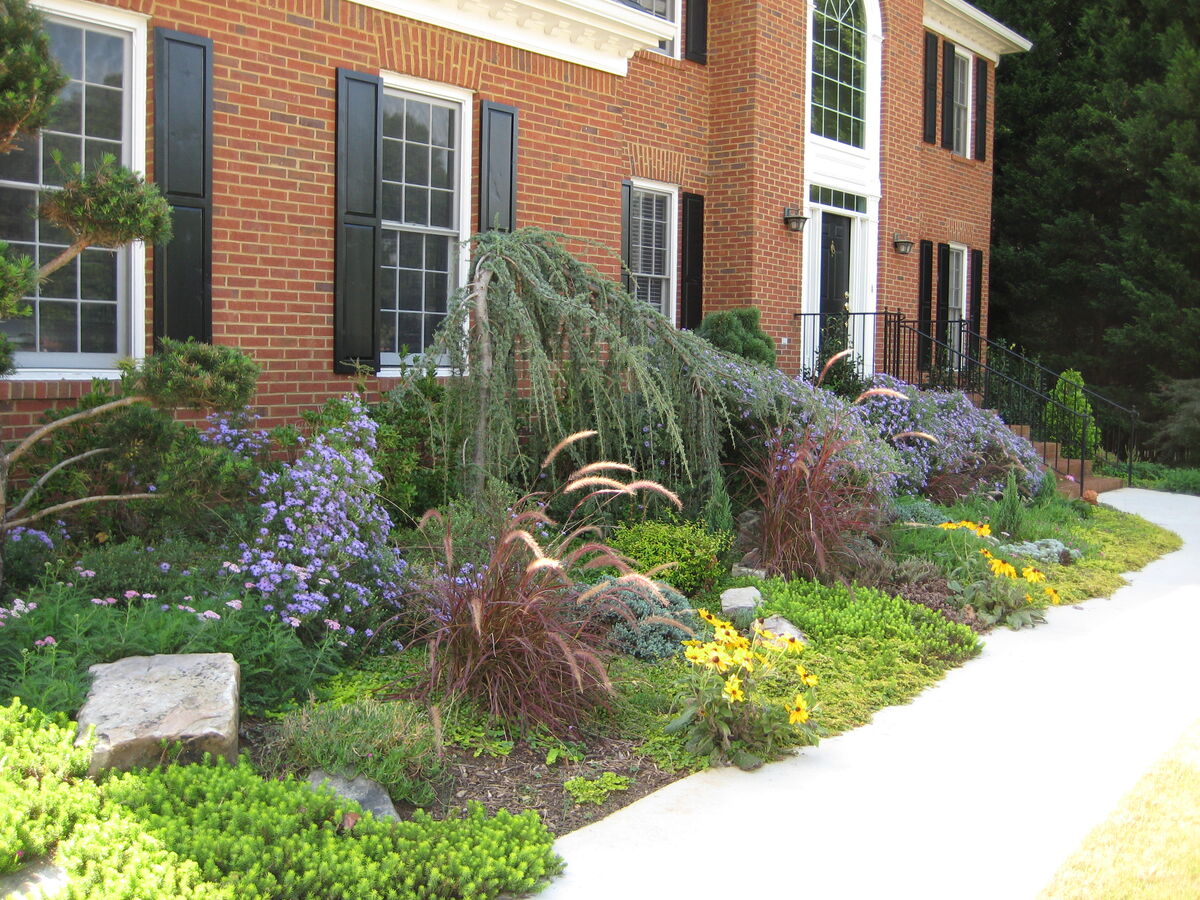
Weeping blue Atlas cedar
Cedrus atlantica ‘Glauca Pendula’3 to 12 ft, set by how it is trained · Full sun · From North Africa
A blue-needled evergreen grown as a single showpiece. It wants soil that drains, and it takes dry weather once settled.
Shrubs
Oakleaf hydrangea
Hydrangea quercifolia4 to 8 ft tall, 4 to 10 ft wide · Sun to part shade · Native to the Southeast
White flower heads from late spring that fade to pink, then tan. Keep it out of hot, dry spots.
Bigleaf hydrangea
Hydrangea macrophylla3 to 6 ft tall and wide · Part shade · From Asia
Blue flowers in acid soil, pink in alkaline. Shade it from afternoon sun. Clemson’s extension service says winter cold damage is the most common reason one fails to bloom.
Sasanqua camellia
Camellia sasanqua6 to 14 ft tall, 5 to 7 ft wide · Sun or part shade · From Japan
Evergreen, flowering in late fall and early winter in white, pink or red. It needs soil that drains and takes dry weather once established.
Boxwood
Buxus3 to 4 ft for littleleaf, 5 to 20 ft for common boxwood · Sun or part shade · From Europe and Japan
The classic clipped evergreen. It needs good drainage, since wet soil rots the roots. Boxwood blight, a disease that strips the leaves and kills branches, is a real risk, so ask about it before planting a hedge.
Inkberry holly
Ilex glabra5 to 10 ft tall, 5 to 8 ft wide · Sun to part shade · Native
An evergreen that takes damp ground. It won’t tolerate drought, and it spreads by suckers into a wider clump.
Virginia sweetspire
Itea virginica4 to 8 ft tall, 3 to 6 ft wide · Part shade · Native
White flower spikes in May and June. It takes wet soil and even periodic flooding, and spreads by root suckers.
Chinese fringe flower
Loropetalum chinense6 to 8 ft tall and wide · Sun or part shade · From Asia
Evergreen, flowering in late March and April in white or pink. It wants acid soil that drains, and gets root rot where water sits.
Piedmont azalea
Rhododendron canescens6 to 15 ft tall, 6 to 10 ft wide · Part shade · Native
A native azalea with pink flowers from March to May. It won’t tolerate dense clay or poor drainage, so clay has to be improved before it goes in.
Low plants and ground covers
Christmas fern
Polystichum acrostichoides1 to 3 ft · Part to full shade · Native
An evergreen fern for the shady side of a wall. Give it drainage: the crown rots in soil that stays wet through winter.
Hosta
Hosta4 in. to 2½ ft tall, by variety · Part to deep shade · From East Asia
Grown for its leaves, with white or lavender flowers in summer. It won’t take soggy soil, and rabbits and slugs eat it.
Lenten rose
Helleborus orientalis1 to 1½ ft · Shade · From Greece and Turkey
Flowers from late winter into spring in white, pink and rose. It seeds itself around, and the plant is toxic if eaten.
Purple coneflower
Echinacea purpurea3 to 4 ft tall · Sun or part shade · Native
Lavender-purple flowers from June to August. It takes dry weather and needs soil that drains.
Black-eyed Susan
Rudbeckia fulgida2 to 3 ft tall · Full sun · Native
Yellow-orange flowers from August to October. It is fine in clay as long as the ground isn’t soggy, and spreads into a wider patch.
Pink muhly grass
Muhlenbergia capillaris2 to 3 ft tall and wide · Full sun · Native
A fine-leaved grass that turns pink from September to November. It must have drainage.
Moss phlox
Phlox subulata4 to 6 in. tall, spreading 2 to 3 ft · Full sun · Native
A low mat covered in pink, purple or white flowers in April and May. It needs soil that drains.
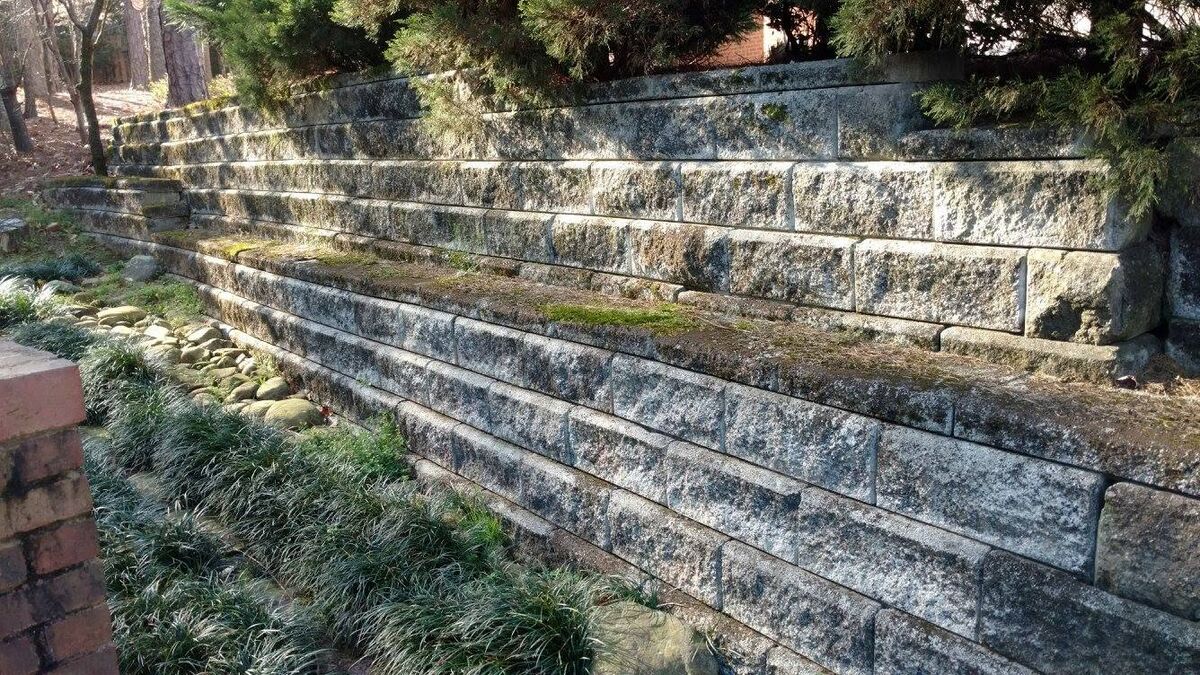
Mondo grass
Ophiopogon japonicus6 to 12 in. tall; dwarf forms about 3 in. · Shade to sun · From Asia
A dark green, grass-like edging plant that spreads into a mat. NC State Extension notes that it resists both deer and foot traffic.
Between stepping stones
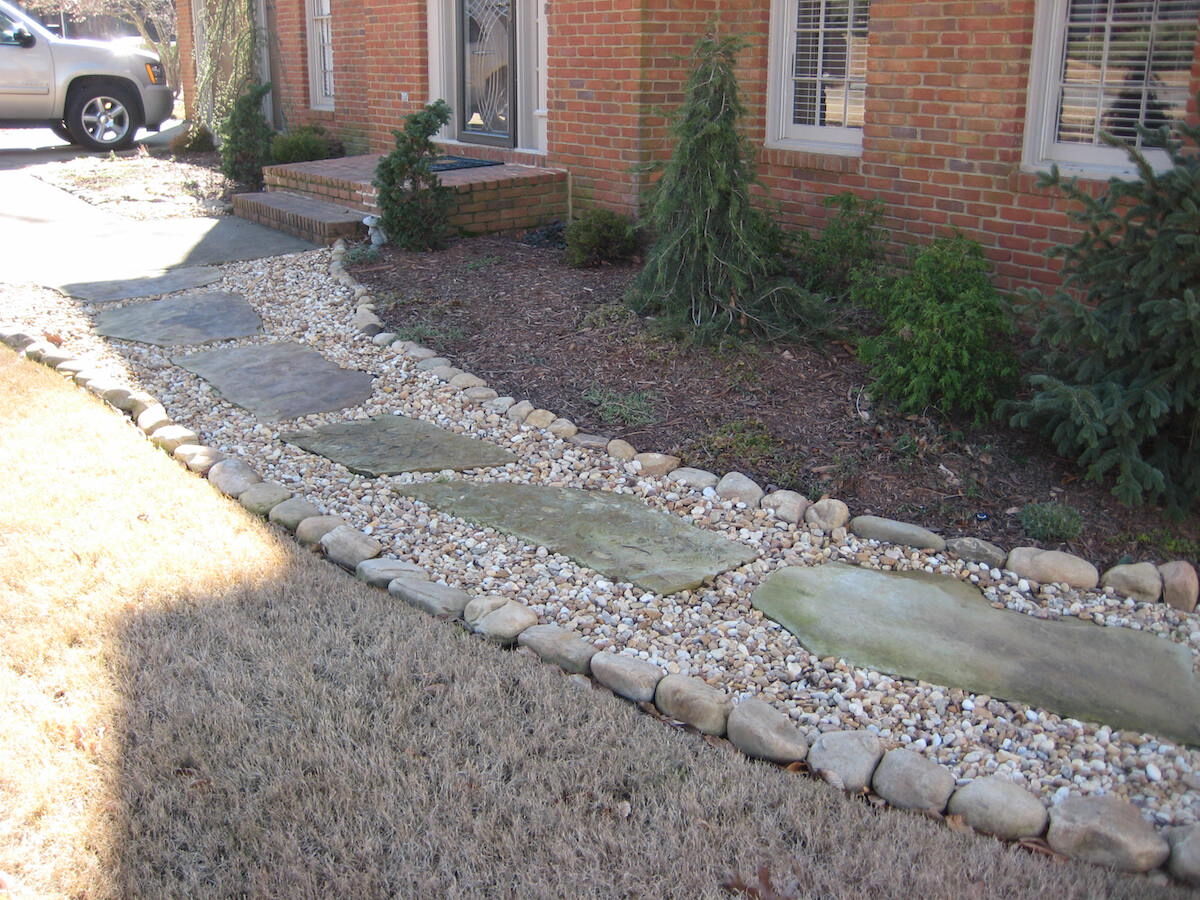
The gaps in a stepping path get walked on, baked and washed out, so few plants last there.
- In sun: creeping thyme. NC State describes it as a dense mat, 3 to 6 inches tall, that tolerates moderate foot traffic. University of Georgia Extension lists it as often used between stepping stones. It needs sharp drainage and won’t take wet soil, and Clemson notes that the low-growing thymes handle heat and humidity worse than the taller ones.
- In shade: mondo grass, or its dwarf form.
- Go easy on sedum. It is often suggested, but NC State says sedums stand up to light foot traffic only.
Gravel between the stones is the choice that needs no watering at all.
For a damp spot
These three take ground that stays moist:
- Virginia sweetspire, which tolerates wet soil and periodic flooding.
- Inkberry holly, which tolerates soil that is wet now and then.
- River birch (Betula nigra), which prefers wet sites. It is a big tree, 30 to 70 feet tall and 40 to 60 wide, and it drops twigs, so keep it well away from the house and the gutters.
A plant won’t fix standing water. If a spot holds water for days, sort out the drainage first: standing water in the yard.
What deer leave alone
University of Georgia Extension sorts landscape plants by how often deer eat them. From the plants on this page:
| How often deer eat it | Plants |
|---|---|
| Rarely | Crape myrtle, southern magnolia, boxwood, inkberry holly, Christmas fern, purple coneflower, mondo grass, pink muhly grass, Lenten rose and thyme. |
| Sometimes or oftenProtection is recommended | Flowering dogwood, redbud, Japanese maple, serviceberry, fringe tree, oakleaf and bigleaf hydrangea, Virginia sweetspire, azaleas, hosta and black-eyed Susan. |
Sources: the NC State Extension Gardener Plant Toolbox for sizes and growing needs; University of Georgia Extension’s Native Plants for Georgia, Deer-Tolerant Ornamental Plants and Ground Covers; Clemson’s hydrangea factsheet.
More guides
- Standing waterA simple test for a wet yard, where the water comes from, and which fix suits which cause.
- Stone names and sizesFieldstone, flagstone, boulders, river rock and base stone: what the yard names mean and the sizes each comes in.
- Plain-English glossaryBatter, course, crusher run, swale, surcharge and forty more trade words, explained in a sentence or two.