 ZenScapes Inc
Landscape stone, by the names the yards use
Stone yards north of Atlanta sell by their own names and grades. Here is what each one means, the sizes it comes in, and where it belongs in a yard.
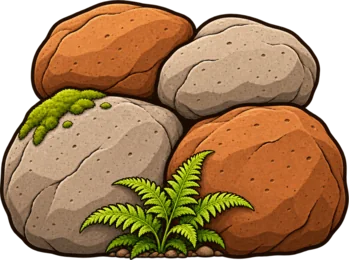
Most of the fieldstone and flagstone sold around here goes by “Tennessee”, then by grade or color. The names below are the ones you’ll see on a yard’s price list and hear on a job.
Wall stone
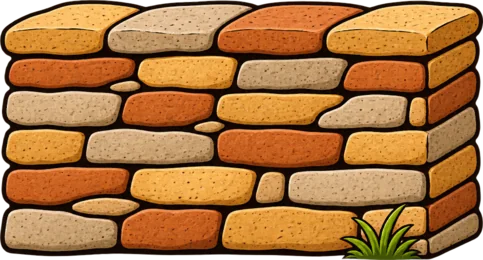
Fieldstone
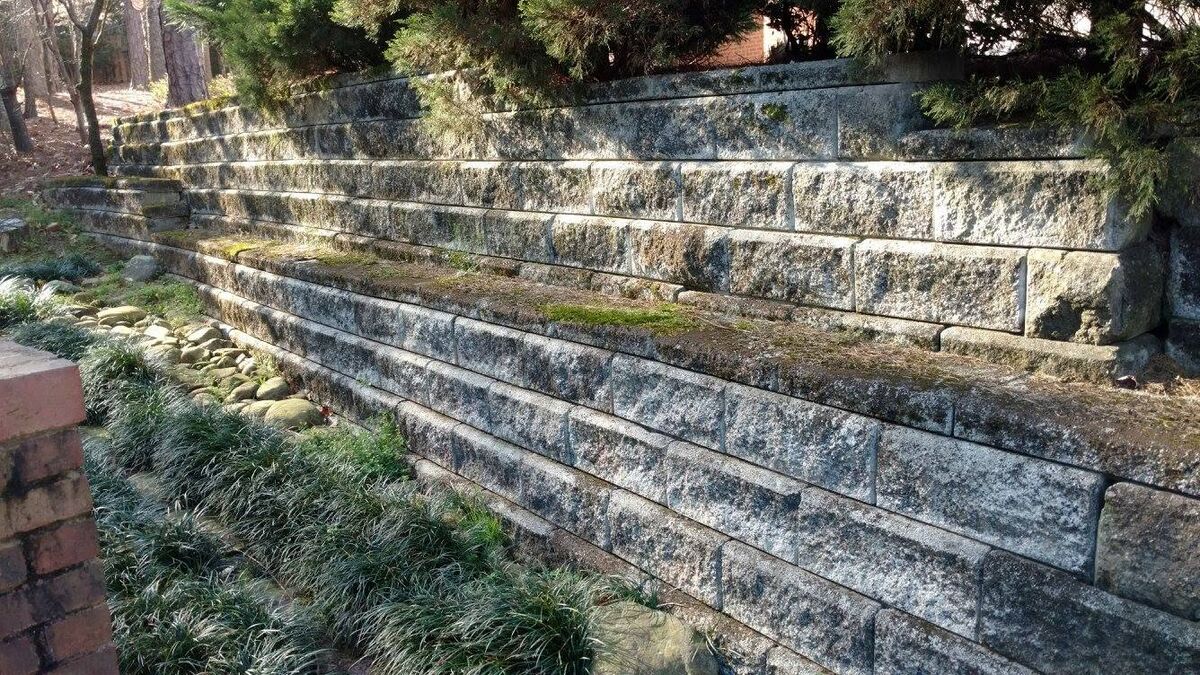
Natural stone with weathered faces, sorted by thickness for stacking. One local yard lists thin stack at 1 to 2 inches thick, medium stack at 3 to 4 inches and thick stack at about 6 inches.
Thin and medium stack suit planter walls, seat walls and borders. Thick stack has the weight for a retaining wall. More on how it goes together: dry-stacked stone walls.
Boulders
Sized by how many people it takes to carry one: one-man, two-man, and on up to stone only a machine can set. One yard gives its range as 8 to 36 inches across. Boulders are sold by the ton.
They go into retaining walls on taller banks and steep slopes, and are set singly in a bed as accents.
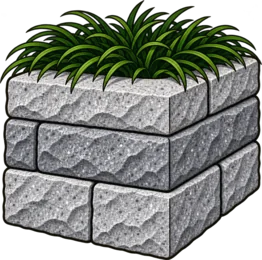
Cut granite
Squared granite block, for a more formal wall that suits a brick home. Georgia quarries its own. The industry is centered on Elberton, in the northeast of the state, where a belt of blue granite about fifteen miles wide runs on into Oglethorpe and Madison counties.
Flat stone
Flagstone
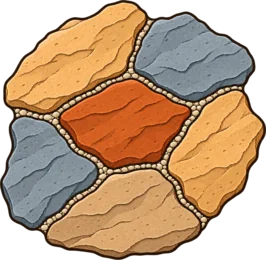
Flagstone is a shape, not a kind of rock: any stone that splits into flat slabs. Around here it is mostly Tennessee sandstone, sold by color (gray, brown, buff or mixed) and by thickness.
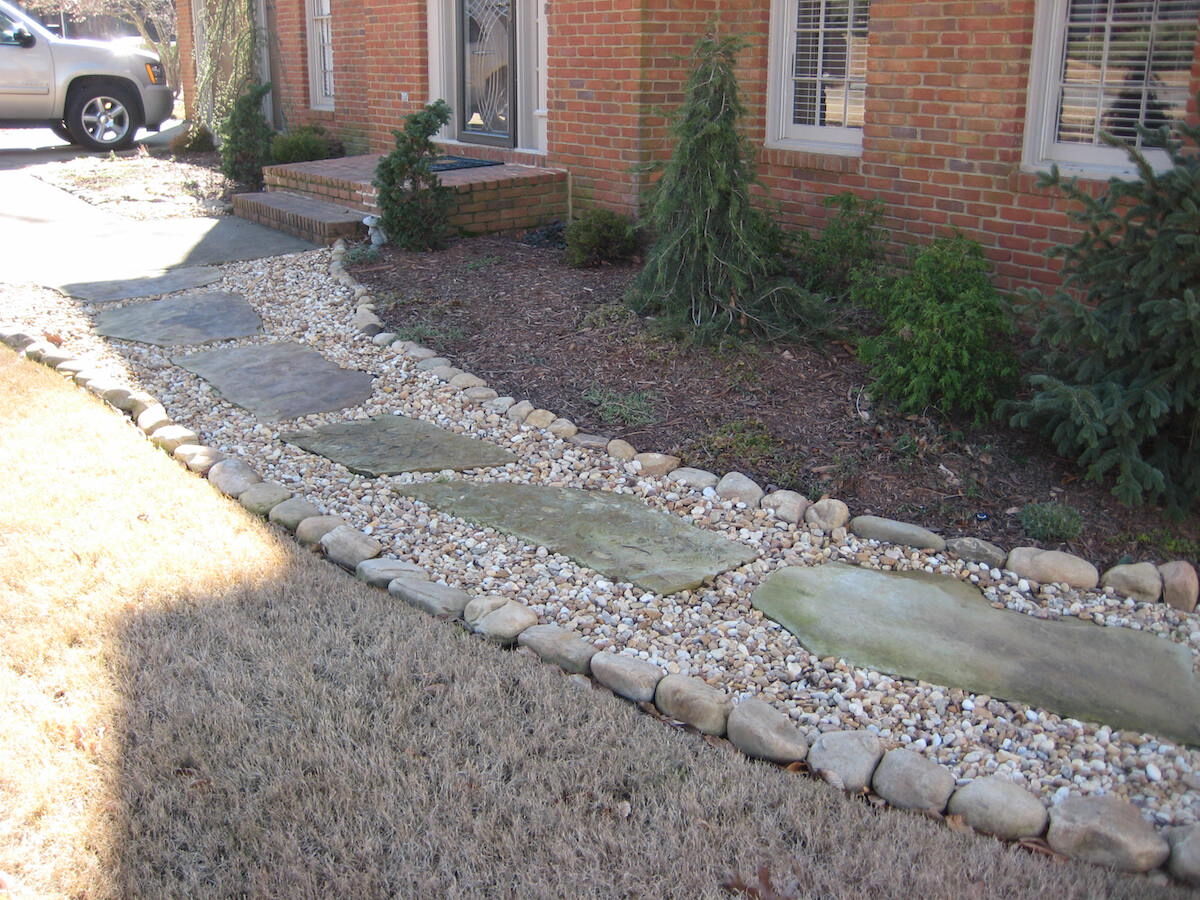
One yard grades it thin at about 1 inch, standard at 1½ inches and thick at 2 inches. Another sells regular at 1 to 1½ inches and heavy at 1¾ to 2½. It is used for patios, walkways and stepping paths.
Crab Orchard
A Tennessee sandstone quarried from Crab Orchard Mountain on the Cumberland Plateau. Some yards sell their Tennessee flagstone under this name.
Pennsylvania bluestone
A sandstone from northeastern Pennsylvania and the Catskills of New York. It is used for patios, step treads and more formal work.
Steps
Step treads
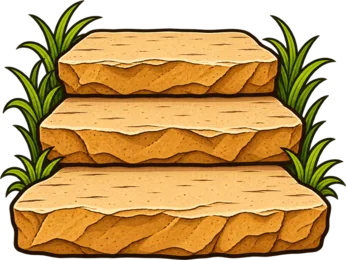
Flat pieces cut to regular sizes. The common ones are 18 by 36 inches and 18 by 48 inches.
Slab steps
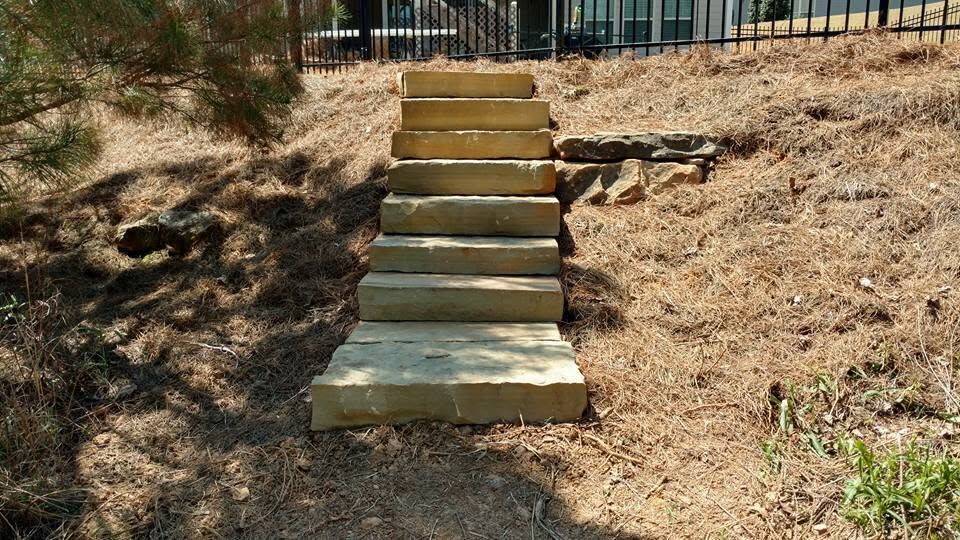
Thicker, rougher pieces, one to a step. One yard lists them 3 and 4 feet long, 18 inches from front to back and 5 to 7 inches high. Each slab is set into the slope, so the step is a single stone.
Rounded stone
River rock
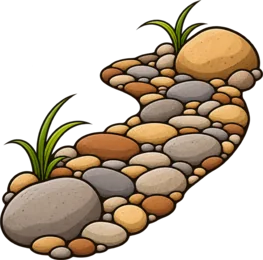
Stone rounded and smoothed by water, sold by size. It lines dry creek beds, drainage channels and the runs below downspouts. See dry creek bed or French drain?
Egg rock
The small grade of river rock, about the size of a goose egg, or roughly 2 to 4 inches.
Pea gravel
Rounded gravel a quarter to half an inch across. It rolls underfoot and doesn’t pack down, so it suits a path or a bed and makes a poor base.
Base and drain stone
You won’t see these when the job is done. They are what the stone you do see is sitting on.
| Name | What it is | What it’s for |
|---|---|---|
| #57 stone | Angular crushed granite, about three quarters of an inch across. | Drainage: behind retaining walls and around drain pipe. |
| Crusher run | Crushed granite with the stone dust left in, so it packs down hard. | The base under walls, patios and pavers. |
| M10 granite sand | Finely crushed granite. | The bedding layer that flagstone and pavers are set in. |
Sources: the product lists of Cherokee Stone Center, The Stone Center and Cummin Landscape Supply; the Tennessee Encyclopedia on Crab Orchard stone; the New Georgia Encyclopedia on granite; the Paleontological Research Institution’s Teacher-Friendly Guide on bluestone.
More guides
- Dry-stacked wallsStone walls laid without mortar: what keeps them up, how high they go, and why they last.
- Plain-English glossaryBatter, course, crusher run, swale, surcharge and forty more trade words, explained in a sentence or two.
- Plants beside stoneSmall trees, shrubs and ground covers for North Georgia, with size, sun, soil and deer notes for each.